
As pickleball’s popularity continues to surge, so does the number of players heading to the clinic. While the sport is a fantastic, low-impact way to stay active, its fast-paced nature, sudden stops, and rapid lateral movements place unique demands on the body.
Working with a professional through physical therapy is the most effective way to recover from pickleball injuries and proactively prevent future court-side accidents.
5 Most Common Pickleball Injuries
The combination of movements and repetitive paddling often targets specific muscle groups and joints.
- "Tennis/Pickleball Elbow" (Lateral Epicondylitis): Caused by gripping the paddle too tightly or using improper mechanics, leading to painful tendon inflammation in the forearm.
- Achilles Tendinitis and Strains: Sudden, explosive sprints from a standstill frequently overstretch or tear the calf muscles and Achilles tendon.
- Rotator Cuff Strains: Repetitive overhead smashes and deep reaches put intense friction and stress on the delicate shoulder tendons.
- Ankle Sprains: Sharp, side-to-side lateral movements on hard court surfaces can easily cause the ankle joint to roll unexpectedly.
- Meniscus and Knee Strains: Sudden twisting maneuvers combined with deep lunges place heavy rotational stress on the knees.
The Benefits of Physical Therapy for Players
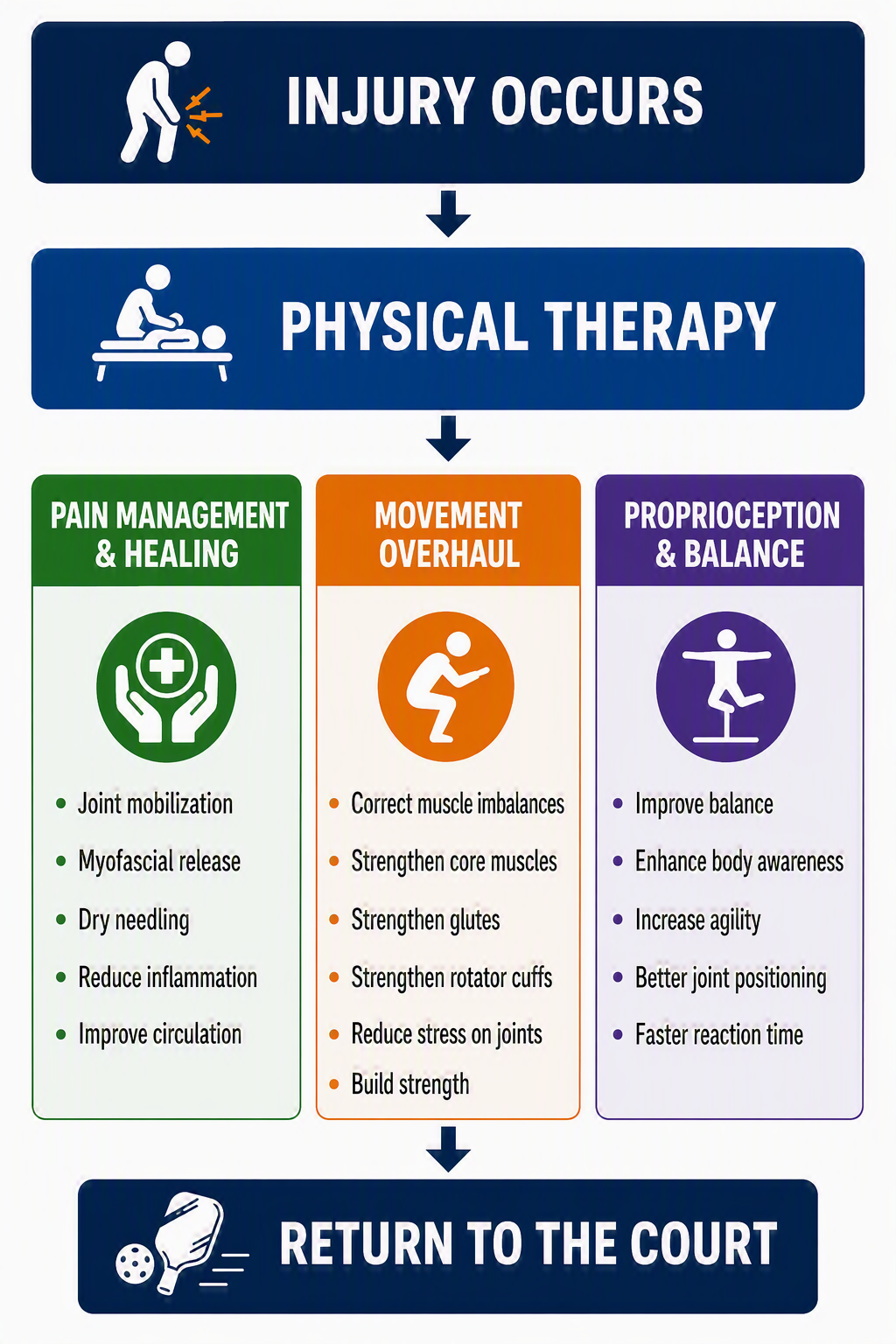
Physical therapy (PT) does more than just patch up an injury; it actively modifies how your body moves to make you a more resilient athlete.
1. Pain Management and Accelerated Healing
Therapists utilize targeted manual therapies like joint mobilization, myofascial release, and dry needling to reduce acute inflammation and naturally boost blood circulation.
2. Targeted Biomechanical Strength
PT programs address deep muscle imbalances. Therapists focus heavily on strengthening your core, glutes, and rotator cuffs to take the daily pressure off your overused joints.
3. Enhanced Proprioception and Balance
Pickleball requires incredible agility. PT sharpens your proprioception—your brain's subconscious awareness of joint positioning—which helps you maintain balance during intense, quick, and reactive movements.
4. Custom Preventative Strategies
A physical therapist evaluates your specific movement patterns to spot hidden weaknesses before they lead to structural damage. They can also guide you toward better paddle grip sizes and proper court-specific footwear.
The above tips are provided by Ryan Collins, DPT from Specialized Orthopedic Physical Therapy. They are conveniently located at Wood River Health's Hope Valley facility. Many of Wood River Health's staff have greatly benefitted from becoming SOPT clients. Book an appointment by calling 401.387.9630.